Tuesday, May 18, 2010

Darter

The Darter is also called "Snake-bird" because of its long, snake-like neck. As it swims along the surface of the water you can often only see its neck out of the water, not unlike a snake swimming.

The Darter is a widespread water bird in many parts of Australia where there is suitable habitat. It frequents lakes, rivers, reservoirs, swamps, lagoons and estuaries but rarely the open sea. After swimming individuals can be seen perched on a bank, log or tree branch with wings outstretched drying out the feathers which are not water resistant.

To read more about Australian birds, and to see many more photos of them go to Trevor's Birding blog.


Sunday, May 16, 2010

Pied Currawong

Pied Currawongs are found along the eastern part of Australia, from Cape York Peninsula down through to Victoria and to the south eastern tip of South Australia. They are a relatively common bird in their range. Their far reaching call is a well known sound in the forests, woodlands and farming areas in their range, as well as in parks and gardens in populated areas.

The photos on this post were taken from the kitchen window of my son's house in Artarmon in inner north Sydney. It was being harassed by several Noisy Miners.

To read more about Australian birds go to Trevor's Birding, my other blog about birds.


Friday, May 14, 2010

Grey Currawong


We have several species of currawongs in Australia. These birds which look a bit like crows or ravens are found in many parts of Australia. The common one around where we live is the Grey Currawong. A juvenile is shown in the photo above.

I love hearing its far reaching call echoing through the mallee scrub. It seems to carry for over a kilometer on a still morning. We've lived in our house for over 25 years and for most of that time we never had currawongs visiting our garden. This has changed in the last five years and they are now almost daily visitors.

The local small birds like the honeyeaters do not enjoy these visits. They all set up a terribly noisy kerfuffle for they know that the currawongs will rob raid their nests given half a chance. Many baby birds get eaten by such predators.

To learn more about Australian birds go to my other  blog called Trevor's Birding.

Wednesday, May 12, 2010

White-browed Babbler

One of the more interesting bird species we have in our garden is the White-browed Babbler. This is one os several species of babblers in Australia, but the only one found near where we live.

I am always amused by these birds - they seem to be the clowns of the bird world, hopping around madly chasing one another or seeking a better place to find beetles and other bugs. All the time the mew like demented cats!

They tend to be found in family groups of 5 - 15 and the whole family will set to and make a rough, untidy nest of grass and fine twigs. Sometime it takes the flock less than a hour or two to make a nest. It is often used for roosting at night.

To read more about Australian birds and see more photos of them go to my other site called Trevor's Birding.

Monday, May 10, 2010

Singing Honeyeater


There are many different kinds of honeyeaters in Australia. These birds, as their name suggests, are largely nectivorous. Many also eats fruits, berries and insects. We regularly have seven different species of honeyeaters in our garden, most of them resident breeding species.

The Singing Honeyeater is one of these species, present in small numbers, perhaps 4 - 6 at any one time. During our long hot and dry summers they enjoy coming to our bird baths for a drink. They also enjoy feeding on the nectar of the flowers of the many native Australian plants we have in our garden.

To find out more about Australian birds click here.

Saturday, May 08, 2010

Yellow-rumped Thornbill


Australia has a number of species of thornbills, small birds which feed on the ground or in the foliage of trees and bushes. The most common species in our garden and mallee scrub near our house are the beautiful Yellow-rumped Thornbills.

Quite often we see or hear flocks of 5 - 15 moving through the garden calling to each other as they feed. On hot days in the summer they are regular visitors to our bird baths giving us excellent views of this tiny bird.

To learn more about Australian birds go to my other birding blog called Trevor's Birding.


Thursday, May 06, 2010

Mallee Ringneck Parrots


Australia has many very colourful birds, especially in our parrots. One of those beautiful birds has to be the Australian Ringneck parrot. This species has several sub-species, including the Mallee Ringneck shown in the photos on this post.

This parrot is a resident breeding species in our garden. We see 4 - 6 of these beautiful birds on a daily basis as they feed in the garden of nearby paddocks and mallee scrub. They are also daily visitors to our bird baths during our hot, dry summers.

You can read more about Australian birds on my other blog called Trevor's Birding.


Tuesday, May 04, 2010

Striated Pardalote


One of my favourite garden birds would have to be the tiny Striated Pardalotes. I often hear their "peep peep" calls as they feed in the eucalyptus trees just outside my office window. They are insectivorous and when I'm out in the garden I can sometimes hear their little beaks snapping up tasty morsels as they catch their lunch.

This species is one of several found in Australia. we also have the Yellow-rumped Pardalote resident in our garden. I'll write about that another day.

Pardalotes make a nest in the hollows of trees. They will also make a small tunnel in sand with a nesting hollow at the end of the short tunnel.

For more information about Australian birds go to Trevor's Birding here.


Sunday, May 02, 2010

Crested Pigeon


We have many Crested Pigeons in our garden and the surrounding mallee scrub. On some occasions I have seen as many as forty perched on the power lines going along the road. They are a delight to have around and will often allow me to approach to within a few meters of where they are sitting. They also enjoy coming to drink from our bird baths on hot summer's days.

To read more about our wonderful birds here in Australia, go to Trevor's Birding.


Friday, April 30, 2010

Pacific Black Duck

Pacific Black Ducks are very common throughout most of Australia where there is suitable habitat. While they often prefer artificial lakes and ponds in parks and gardens, they can also be found in many rivers, dams, reservoirs, swamps, wetlands, estuaries and lakes. Numbers can vary from a pair to many hundreds in loose flocks.
To read more about Australian birds go to Trevor's Birding.

Wednesday, April 28, 2010

Australian Magpie Lark

The Australian Magpie Lark is a common bird in many parts of Australia. It is smaller than the Australian Magpie and often lives in close association with magpies. It is somewhat unusual in that it builds a mud nest in the shape of a small bowl. It can be found in many different habitats but especially prefers sports ovals, parks and gardens.

For more information about Australia birds check our Trevor's Birding here.

Monday, April 26, 2010

Ostriches in Australia

Ostriches are not an Australian native bird. They occur naturally in Africa, but if I want to see some Ostriches here in Australia I just have to drive for about ten minutes and visit the Monarto Zoo, just a few kilometers from my home.

Monarto Zoo is an open range zoo with large tracts of land for the animals on display. Ostriches were once farmed in Australia in the 1800s for their feathers which decorated elaborate hats. More recently they have been farmed for their meat.

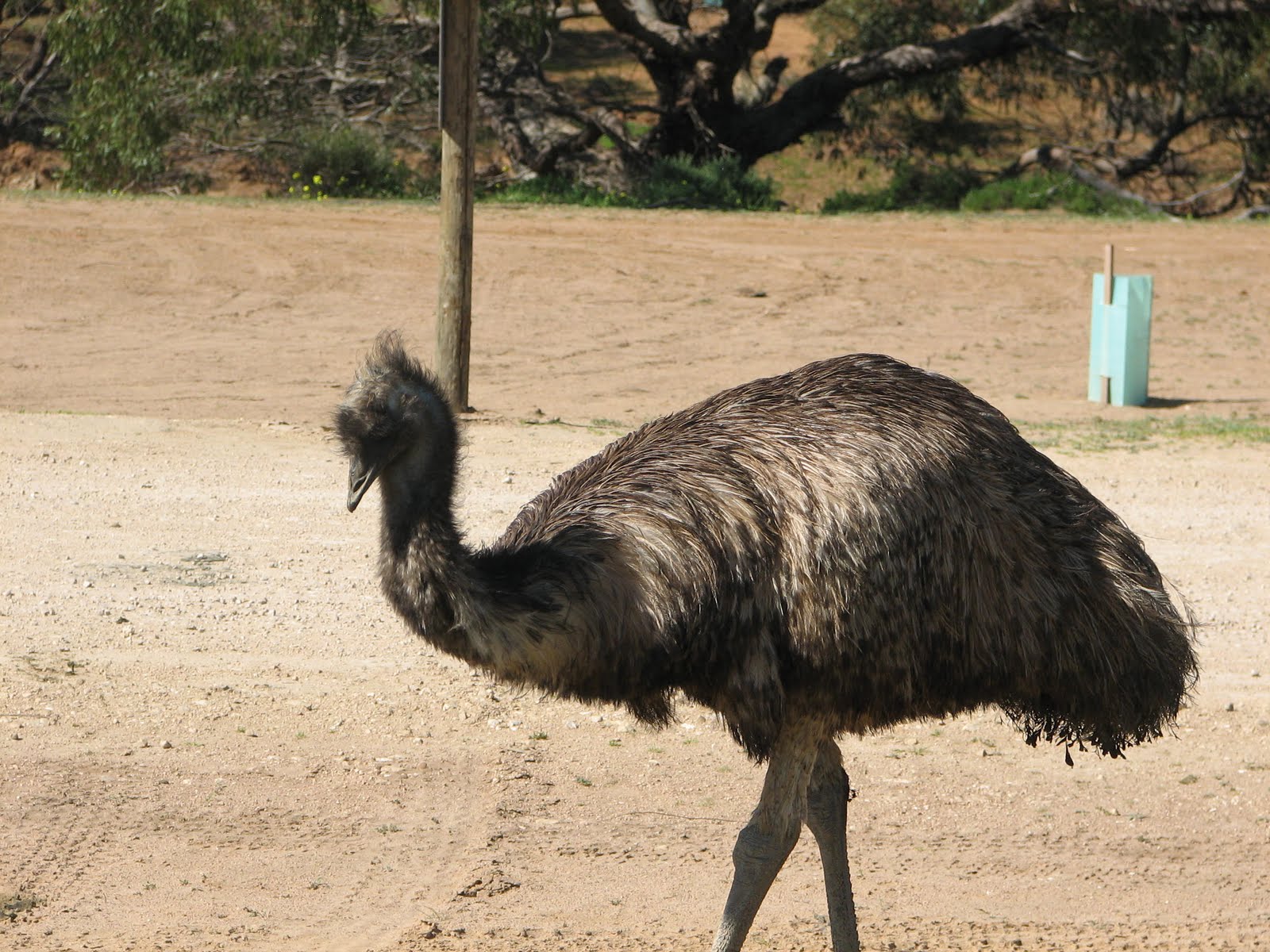
Below is a photo of an Australian Emu for comparison. This was also taken at Monarto Zoo.

To read more about Australian birds click here.


Saturday, April 24, 2010

Brown Falcon

Brown falcons are widespread in Australia. It is a common bird of prey in our country. It is also a common visitor to our garden and patch of mallee scrub behind our house. This photo was taken at the nearby Monarto Zoo, just a few kilometres from our home.
For more information about Australian birds, check out Trevor's Birding.

Tuesday, April 20, 2010

Weebills

The Weebill is Australia's smallest bird, averaging only 8 - 9 cm in length. Despite its small size it has a remarkably loud call as it forages for insects in the outer foliage of trees and bushes, often in family groups of 4 or 5 birds. It is found throughout most of Australia (except Tasmania) in drier woodlands, mallee scrubs and mulga.

For more information about Australian birds visit Trevor's Birding.

Saturday, April 17, 2010

Pied Butcherbirds

To untrained eyes the Pied Butcherbird may appear to be a smaller version of our well known Australian Magpie. They are closely related and share similar wonderful singing skills. The melodious call of the Pied Butcherbird is not easily forgotten, filling the Australian bush with its rich calls.

Butcherbirds get their name from their habit of raiding the nests of other birds for nestlings, then attaching the poor baby birds to twigs or in the fork of branches like they are hanging them up in their butcher shop. This habit helps them to pull off bits to eat. They will also eat a range of insects.

For more information about Australian Birds click here


Thursday, April 15, 2010

Black-faced Cuckoo-shrike


An infrequent visitor to our garden is the Black-faced Cuckoo-shrike shown in the photo above. This species is found throughout Australia and is one of several species of cuckoo-shrikes (they are actually neither cuckoos nor shrikes!).

Their preferred habitats include woodlands, forests, scrublands and parks and gardens. Their soft churring sound is made while flying or sitting in a tree; I find it strangely soothing.

For more information about Australian birds click here.

Tuesday, April 13, 2010

Eurasian Coots


The Eurasian Coot is a widespread bird species in many parts of the world, including here in Australia. This familiar waterbird with its bright white bill and bill-shield is very abundant throughout Australia, especially in the eastern half of the continent. It is only absent in the driest inland areas.

The Coot's preferred habitats include rivers, lakes, dams, wetlands, reservoirs and sometimes estuarine waters. They can number in the hundreds in one locality. They are nomadic and can appear in large numbers when conditions are ideal, especially for breeding. The type of nest is shown below. Photos of baby coots can be seen here.

For more information about Australian birds click here.


Sunday, April 11, 2010

Long-billed Corellas

Long-billed Corellas are restricted to the south eastern parts of mainland Australia. They have longer bills than the Little Corella and enjoy similar habitats. I wrote about Little Corellas yesterday.

They can form large flocks in the hundreds. They make their nest in the hollow of a tree.

For more information about Australian birds click here.


Friday, April 09, 2010

Little Corellas


Little Corellas make up one of Australia's largest groups of parrots, with flocks often numbering in the 100s and sometimes in the 1000s. As such they can become a pest species in wheat and other cereal growing areas.

Little Corellas are widespread throughout inland Australia and are gradually expanding their range. They can be extremely raucous when calling, especially in large flocks. They are also well loved as a pet bird and can be taught to speak a few words.

For more information about Australian Birds click here.


Thursday, April 08, 2010

Sulphur-crested Cockatoos

Sulphur-crested Cockatoos are found throughout northern, eastern and south eastern Australia. Their preferred habitat includes eucalyptus woodlands and forests and temperate rainforests. In the right conditions they can form flocks of a hundred or more, sometimes in association with Corellas.

Sulphur-crested Cockatoos are much prized as a pet and can be taught to say a few words. On the other hand, wild birds are able to cause damage to wooden structures on houses and other buildings, bringing them in conflict with humans. Despite this they are fully protected by law.

To find out more about Australian birds click here.


Wednesday, April 07, 2010

White-winged Choughs

White-winged Choughs (pronounced "chuffs") are a resident breeding species in our garden. We usually have a family of about 12 - 15 here every day. Sometimes they are joined by another flock. I have seen a flock of about 30 flew through our mallee scrub near the house.

Choughs make a large bowl shaped nest out of mud, reinforced with twigs and grass. The whole family builds the nest and tend to the young. They are found throughout eastern and south eastern Australia.
For more information about Australian Birds click here

.

Tuesday, April 06, 2010

Grey Butcherbird

Grey Butcherbirds are closely related to the much larger Australian Magpie. Like magpies they are beautiful song birds. Every few days one or two will visit our garden and then fill the air with their beautiful, rich, melodious song. Their presence usually sends all of the smaller birds, such as the honeyeaters, scurrying for cover. Butcherbirds regularly raid the nests of other birds for eggs or nestlings.
For more information about Australian birds click here.

Monday, April 05, 2010

Budgerigars

Budgerigars are a small Australian parrot much loved as a pet around the world, often in many colour variations. The two shown in the photo above are their natural plumage colours. I don't particularly like the variations produced by selective breeding; why try to improve on perfection!
Budgerigars are found over much of Australia except for the wetter coastal regions. We only occasionally get them visiting our garden which is a pity.
Budgerigars will respond to good rains inland and breed in prolific numbers. Flocks can number in the thousands when conditions are right. They make their nest in a tree hollow.
For more information about Australian birds click here.

This photo can now be bought on coffee mugs and other items: click here


Sunday, April 04, 2010

Rainbow Bee-eaters

Rainbow Beeeaters are one of Australia's most colourful birds. They are about the size of a Common Starling but far more beautiful. They are seasonally migratory in Australia, arriving here in the southern part of the continent in early spring, breeding and then returning to warmer parts in the north in late summer, early autumn.

Their nest is a hollow chamber at the end of a 30-40cm tunnel in sand, often in the side of a bank along a road or creek bed. They catch insects - not just bees - on the wing as they soar around.

They are one of my favourite birds and we always delight in their visits to our garden.
For more information about Australian Birds click here.

Saturday, April 03, 2010

Australian Pelicans

The Australian Pelican is a common waterbird found throughout Australia. Like all pelicans they are large birds found in rivers, lakes, swamps, estuaries, bays and sometimes open sea. They are found throughout Australia, even the inland when conditions are right.after rain or floods.

They can be found singly through to flocks numbering in the hundreds. They often nest communally in large numbers, often on islands where there are no predators (eg foxes). Flocks are sometimes found flying at great heights, over several thousand metres.

For more information about Australian birds click here


.


Friday, April 02, 2010

Australian Magpies

Australian Magpies are common throughout must of Australia. There are several well recognised races or sub species, including the Western Magpie, the White-backed Magpie and the Black-backed Magpie.

Australian Magpies are beautiful song birds and many people love hearing their warbling and carolling calls. Some people dislike this species during the breeding season. The male will valiantly defend the nest by swooping anyone who dares to come near. Their sharp beak can inflict a nasty wound, often drawing blood.

You can read more about Australian birds here

The above photo is a male while the one below is a juvenile begging to be fed.

.


Thursday, April 01, 2010

The Australian Emu

The Emu is Australia's largest bird. It is one of the largest birds in the world. It is also flightless.

The female lays her eggs in a depression in the ground. The male then incubates the eggs and cares for the young for up to about 18 months.

For more about Australian birds click here.

Wednesday, March 31, 2010

An Australian Parrot: the Galah

The beautiful Galah is one of the most recognisable of Australian parrots. It can be found in large numbers throughout most of Australia. Flocks can range from a few individuals (2-10) through to many hundreds all flying together. Their beautiful pink feathers make a spectacular sight when a flock flies overhead.

They are also a very popular pet and can be taught to speak a few words. The photos on this post were taken in my garden. They are all of wild birds.

You can read more about Australian birds here.

Photos like these can now be bought on coffee mugs and many other items such as tee-shirts, postcards and so on: click here. 


Tuesday, March 30, 2010

Laughing Kookaburra

On a family visit to Taronga Park Zoo in Sydney this member of the kingfisher family, a Laughing Kookaburra, posed beautifully for my camera. The call of the kookaburra is synonymous with the Australian bush.

To read more about Australian birds and to see more photos of them click here.

Silver Gulls, Victor Harbor, South Australia

This lovely shot of two Silver Gulls was taken on the beach near Yilki, Encounter Bay, Victor Harbor on the south coast of South Australia.

More photos and articles about about Australian birds here.

Saturday, September 30, 2006

Rainbow Bee-eaters


One of my all time favourite birds that visit our garden is the Rainbow Bee-eater. Their colours are all the colours of the rainbow, hence the name. They usually visit our area about this time every year, staying around for most of the spring and summer months. In our winter they fly north where it is warmer.

They have an interesting nesting habit - they make a 30-40cm tunnel in the sand and have a little nesting chamber at the end. This has fascinated me since I was a child growing up on a farm near here.


To read my other blog about birds called Trevor's Birding click here.

Thursday, March 23, 2006

New birding blog site

I have moved my birding blog to a new web site.

All future entries can be found at

http://www.trevorsbirding.com

I also have a new blog detailing my travelling adventures at

http://www.trevorstravels.com

My other writings can be found at

http://www.trevorhampel.com

Check me out often - I try to update my blogs every day or so.

Friday, March 03, 2006

Rainbow Lorikeets


Above: Photo of a Rainbow Lorikeet

Rainbow Lorikeets would have to be one of Australia's most beautiful birds. They are aptly named. As they fly overhead in a flash of colour they light up their little patch of the azure blue sky. Their feathers are a brilliant blend of bright reds, greens, blues and yellows. As they screech overhead - and that is an accurate description of their harsh calls - their stunningly red underwings are like a blood-streak across a blue backdrop.

Rainbow Lorikeets are widespread along the northern, eastern and southern coastal regions of Australia. Their preferred habitats include woodlands, rainforests and wherever eucalypts are numerous. They are easily seen in parks and gardens throughout many of our towns and cities.

Despite being quite common I have had some difficulty getting reasonably clear photographs of this species. When flying they seem to be going too fast to focus on them. When feeding they are often well hidden in the thick foliage of a eucalypt tree as they search out nectar from the flowers.

A single tree, if heavily in flower, can be host to twenty or thirty of these stunning beauties, their contact calls a never-ending chorus of murmurings and chatterings. Yet, despite the numbers, most remain hidden amongst the leaves, usually near the top and out of sight - but not out of earshot. In large numbers their screeching can be deafening, especially near sunset as they squabble and jostle for roosting spots.

Thursday, March 02, 2006

Rock Doves

This posting sits a little uneasily. All postings are supposed to be about Australian birds. I am about to break my own rule and show some photos of an introduced species, the Rock Dove or Feral Pigeon. (It is also called a Domestic Pigeon or Homing Pigeon).
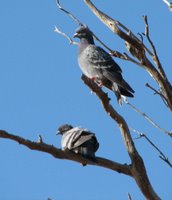

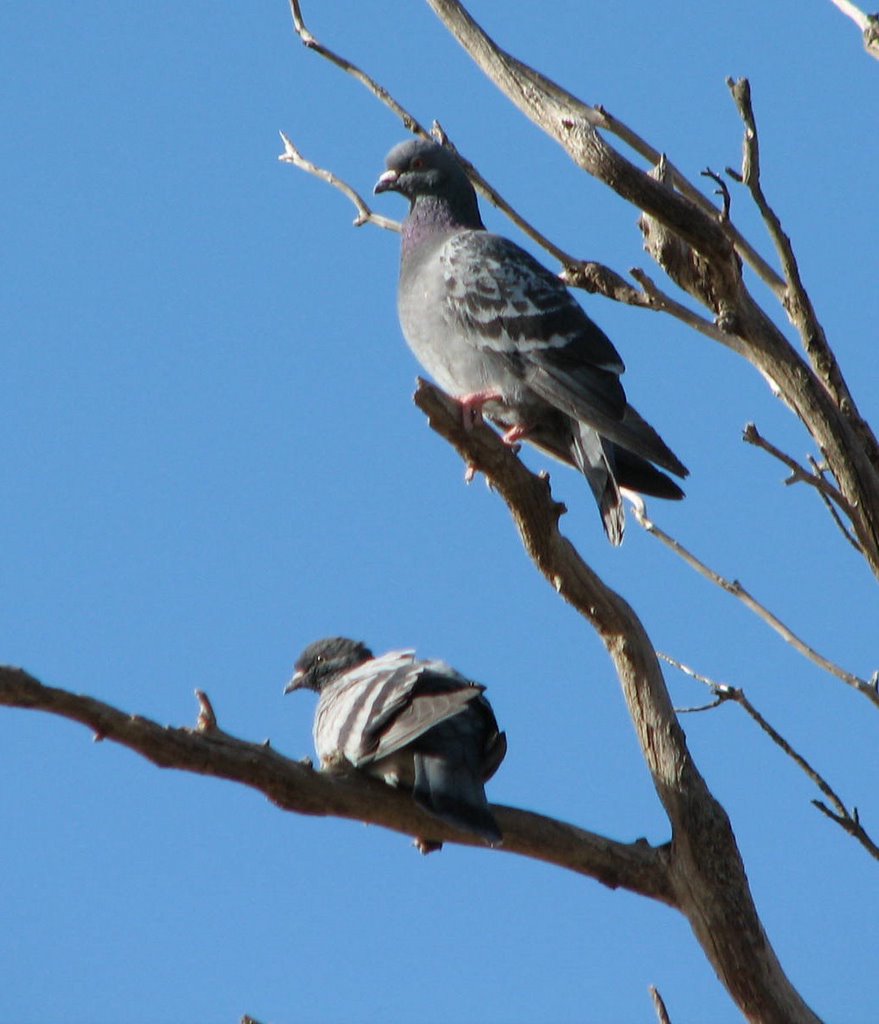
Above: Photo of Rock Doves perching on a dead
eucalyptus branch, near Murray Bridge, South Australia.


A few weeks ago I managed to get a good photograph of two Rock Doves perched on the dead branches of a eucalyptus tree near our home. They allowed me to approach quite close before flying off. Many more were feeding on the ground in a nearby paddock.

In Australia, like so many places, they have become a pest species, especially in city parks and gardens. I have also seen large flocks numbering in the thousands along the coastal cliffs in parts of South Australia.

Rock Doves were introduced to Australia many years ago and have successfully spread throughout the more temperate regions of southern and eastern Australia. They have been particularly successful in our larger cities and towns. Very large flocks can also been seen near grain storage silos in rural areas.


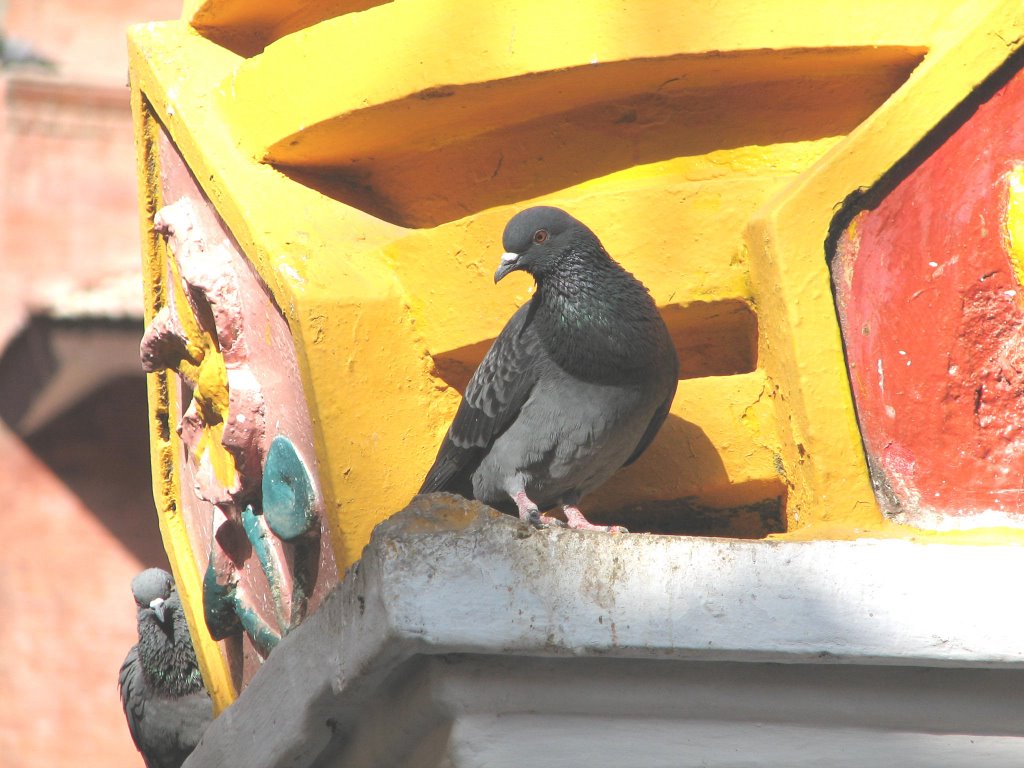
Many cities around the world have a massive pigeon problem. The health risk posed by these birds must be enormous, not to mention the mess they make. On a recent visit to Kathmandu, Nepal, I had the misfortune to be the target of not one but two pigeons on the same day. This annoyance resulted in some extra washing in my hotel room that night. I was so pleased I was wearing a hat at the time.
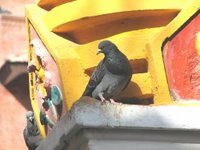

Above: A photo of a Rock Dove on a temple, Kathmandu, Nepal.

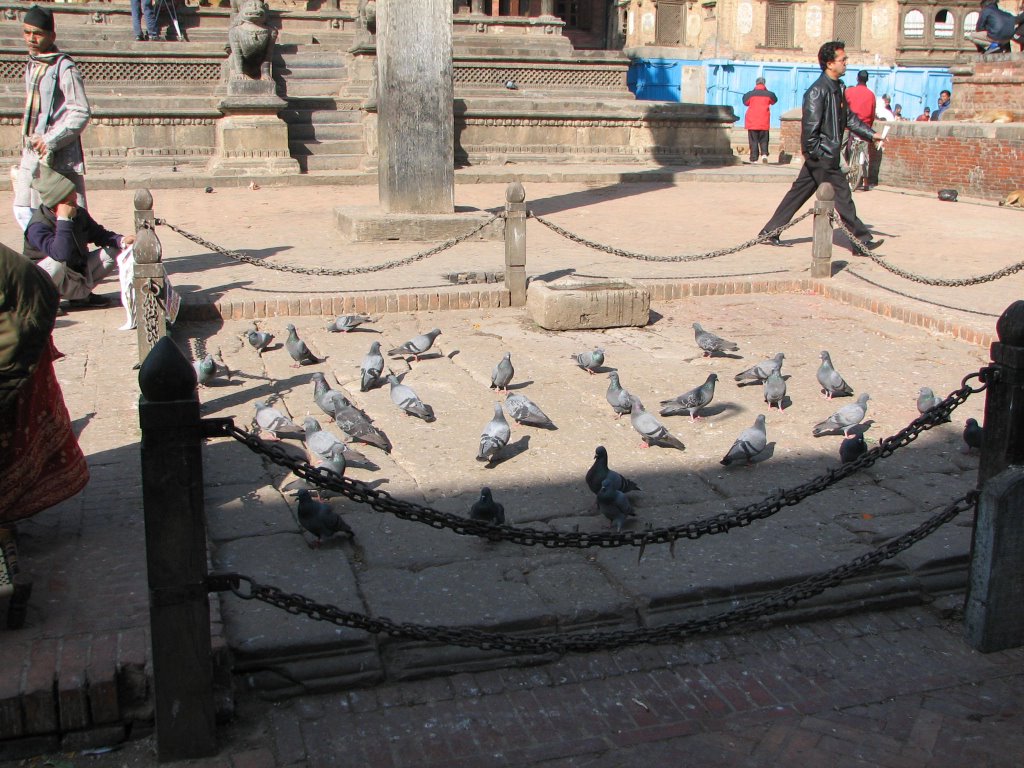
Several days later while visiting the city of Patan, Kathmandu, I saw a local lady selling food for tourists and locals to feed to the local population of pigeons. As the seed was spread by her customers, hundreds of pigeons descended from the nearby temples and other buildings in thick clouds of flapping feathers. They all assembled hurriedly in a little chained off area set aside for the purpose. This is not the way to discourage their booming populations. I didn't stop to ask if feeding the pigeons had some religious significance; perhaps it did.
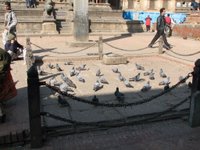


Above: a photo of pigeons in Patan, Nepal.

Wednesday, March 01, 2006

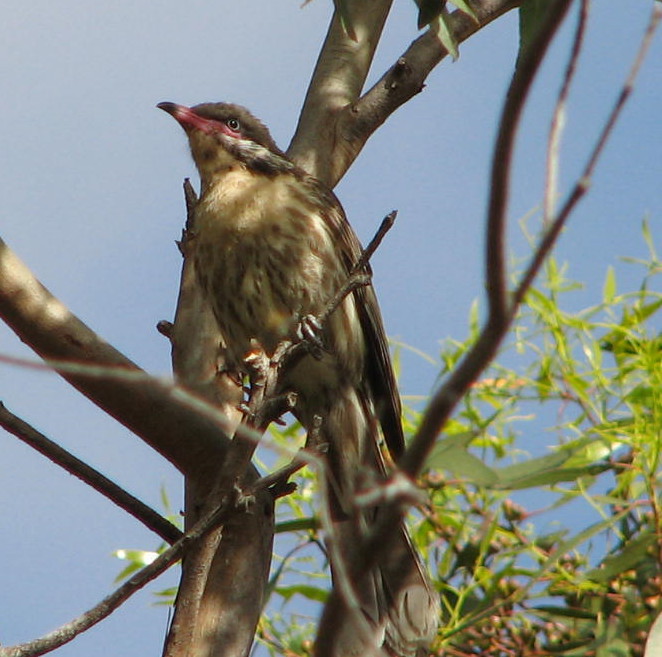
Spiny Cheeked Honeyeaters

A photo of a Spiny Cheeked Honeyeater.

Spiny Cheeked Honeyeaters are a resident breeding species in our garden in Murray Bridge, South Australia. While they are not very common or numerous in this area they are widespread. They tend to be found in the drier, inland regions of Australia but can also be found in some coastal areas. They are not present in the tropical northern regions.

Hardly a day goes by without several of them visiting the bird bath near our sun room. They are often seen feeding on the vast array of native Australian plants in our garden. They have a particular preference for the Correas, Eremophilas and Grevilleas which abound in our garden.

While their calls can be somewhat haunting, I love hearing their "yoo hoo" calls as they scrabble around searching for a feed.