I live in Murray Bridge South Australia. Murray Bridge is about 80km south east of Adelaide. This blog contains interesting and random sightings of birds around my home. It will also document sightings of birds in various places around Australia.
Thursday, April 15, 2010
Black-faced Cuckoo-shrike
An infrequent visitor to our garden is the Black-faced Cuckoo-shrike shown in the photo above. This species is found throughout Australia and is one of several species of cuckoo-shrikes (they are actually neither cuckoos nor shrikes!).
Their preferred habitats include woodlands, forests, scrublands and parks and gardens. Their soft churring sound is made while flying or sitting in a tree; I find it strangely soothing.
For more information about Australian birds click here.
Tuesday, April 13, 2010
Eurasian Coots
The Eurasian Coot is a widespread bird species in many parts of the world, including here in Australia. This familiar waterbird with its bright white bill and bill-shield is very abundant throughout Australia, especially in the eastern half of the continent. It is only absent in the driest inland areas.
The Coot's preferred habitats include rivers, lakes, dams, wetlands, reservoirs and sometimes estuarine waters. They can number in the hundreds in one locality. They are nomadic and can appear in large numbers when conditions are ideal, especially for breeding. The type of nest is shown below. Photos of baby coots can be seen here.
For more information about Australian birds click here.
Sunday, April 11, 2010
Long-billed Corellas
Long-billed Corellas are restricted to the south eastern parts of mainland Australia. They have longer bills than the Little Corella and enjoy similar habitats. I wrote about Little Corellas yesterday.
They can form large flocks in the hundreds. They make their nest in the hollow of a tree.
For more information about Australian birds click here.
They can form large flocks in the hundreds. They make their nest in the hollow of a tree.
For more information about Australian birds click here.
Friday, April 09, 2010
Little Corellas
Little Corellas make up one of Australia's largest groups of parrots, with flocks often numbering in the 100s and sometimes in the 1000s. As such they can become a pest species in wheat and other cereal growing areas.
Little Corellas are widespread throughout inland Australia and are gradually expanding their range. They can be extremely raucous when calling, especially in large flocks. They are also well loved as a pet bird and can be taught to speak a few words.
For more information about Australian Birds click here.
Thursday, April 08, 2010
Sulphur-crested Cockatoos
Sulphur-crested Cockatoos are found throughout northern, eastern and south eastern Australia. Their preferred habitat includes eucalyptus woodlands and forests and temperate rainforests. In the right conditions they can form flocks of a hundred or more, sometimes in association with Corellas.
Sulphur-crested Cockatoos are much prized as a pet and can be taught to say a few words. On the other hand, wild birds are able to cause damage to wooden structures on houses and other buildings, bringing them in conflict with humans. Despite this they are fully protected by law.
To find out more about Australian birds click here.
Sulphur-crested Cockatoos are much prized as a pet and can be taught to say a few words. On the other hand, wild birds are able to cause damage to wooden structures on houses and other buildings, bringing them in conflict with humans. Despite this they are fully protected by law.
To find out more about Australian birds click here.
Wednesday, April 07, 2010
White-winged Choughs
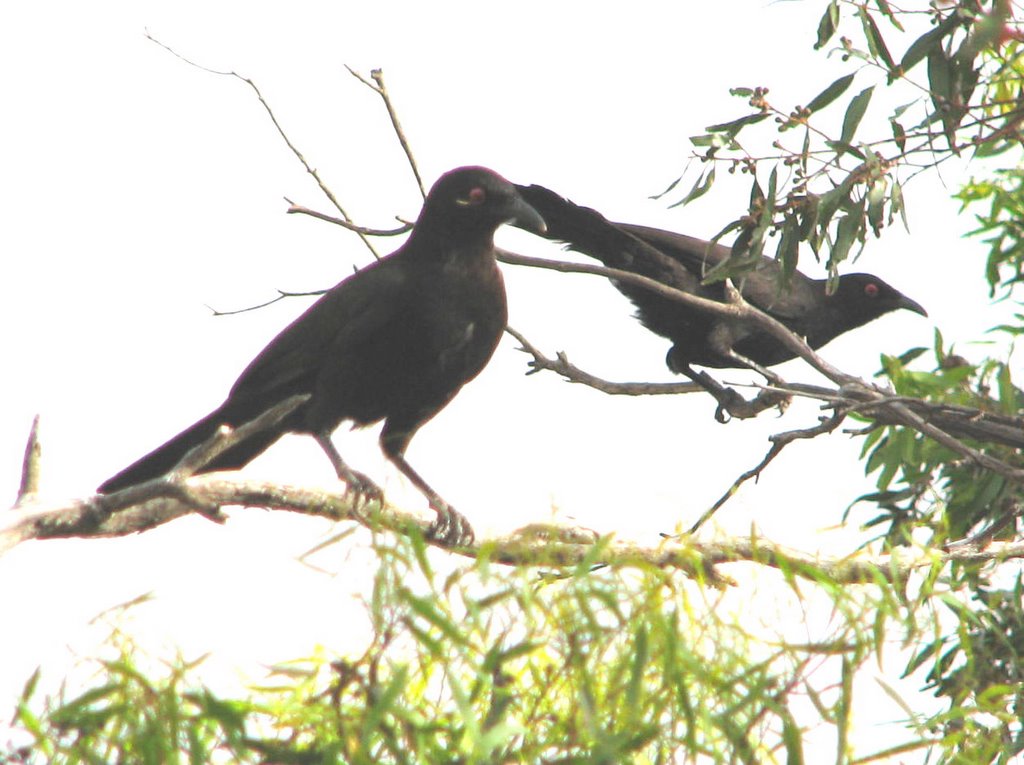
White-winged Choughs (pronounced "chuffs") are a resident breeding species in our garden. We usually have a family of about 12 - 15 here every day. Sometimes they are joined by another flock. I have seen a flock of about 30 flew through our mallee scrub near the house.
Choughs make a large bowl shaped nest out of mud, reinforced with twigs and grass. The whole family builds the nest and tend to the young. They are found throughout eastern and south eastern Australia.
For more information about Australian Birds click here
.
Choughs make a large bowl shaped nest out of mud, reinforced with twigs and grass. The whole family builds the nest and tend to the young. They are found throughout eastern and south eastern Australia.
For more information about Australian Birds click here
.
Tuesday, April 06, 2010
Grey Butcherbird
Grey Butcherbirds are closely related to the much larger Australian Magpie. Like magpies they are beautiful song birds. Every few days one or two will visit our garden and then fill the air with their beautiful, rich, melodious song. Their presence usually sends all of the smaller birds, such as the honeyeaters, scurrying for cover. Butcherbirds regularly raid the nests of other birds for eggs or nestlings.
For more information about Australian birds click here.
Monday, April 05, 2010
Budgerigars
Budgerigars are a small Australian parrot much loved as a pet around the world, often in many colour variations. The two shown in the photo above are their natural plumage colours. I don't particularly like the variations produced by selective breeding; why try to improve on perfection!
Budgerigars are found over much of Australia except for the wetter coastal regions. We only occasionally get them visiting our garden which is a pity.
Budgerigars will respond to good rains inland and breed in prolific numbers. Flocks can number in the thousands when conditions are right. They make their nest in a tree hollow.
For more information about Australian birds click here.
This photo can now be bought on coffee mugs and other items: click here.
Budgerigars are found over much of Australia except for the wetter coastal regions. We only occasionally get them visiting our garden which is a pity.
Budgerigars will respond to good rains inland and breed in prolific numbers. Flocks can number in the thousands when conditions are right. They make their nest in a tree hollow.
For more information about Australian birds click here.
This photo can now be bought on coffee mugs and other items: click here.
Sunday, April 04, 2010
Rainbow Bee-eaters
Rainbow Beeeaters are one of Australia's most colourful birds. They are about the size of a Common Starling but far more beautiful. They are seasonally migratory in Australia, arriving here in the southern part of the continent in early spring, breeding and then returning to warmer parts in the north in late summer, early autumn.
Their nest is a hollow chamber at the end of a 30-40cm tunnel in sand, often in the side of a bank along a road or creek bed. They catch insects - not just bees - on the wing as they soar around.
They are one of my favourite birds and we always delight in their visits to our garden.
For more information about Australian Birds click here.
Their nest is a hollow chamber at the end of a 30-40cm tunnel in sand, often in the side of a bank along a road or creek bed. They catch insects - not just bees - on the wing as they soar around.
They are one of my favourite birds and we always delight in their visits to our garden.
For more information about Australian Birds click here.
Labels:
Australia,
Beeeaters,
Birding,
Birds,
Garden Birds
Saturday, April 03, 2010
Australian Pelicans
The Australian Pelican is a common waterbird found throughout Australia. Like all pelicans they are large birds found in rivers, lakes, swamps, estuaries, bays and sometimes open sea. They are found throughout Australia, even the inland when conditions are right.after rain or floods.
They can be found singly through to flocks numbering in the hundreds. They often nest communally in large numbers, often on islands where there are no predators (eg foxes). Flocks are sometimes found flying at great heights, over several thousand metres.
For more information about Australian birds click here
.
They can be found singly through to flocks numbering in the hundreds. They often nest communally in large numbers, often on islands where there are no predators (eg foxes). Flocks are sometimes found flying at great heights, over several thousand metres.
For more information about Australian birds click here
.
Friday, April 02, 2010
Australian Magpies
Australian Magpies are common throughout must of Australia. There are several well recognised races or sub species, including the Western Magpie, the White-backed Magpie and the Black-backed Magpie.
Australian Magpies are beautiful song birds and many people love hearing their warbling and carolling calls. Some people dislike this species during the breeding season. The male will valiantly defend the nest by swooping anyone who dares to come near. Their sharp beak can inflict a nasty wound, often drawing blood.
You can read more about Australian birds here
The above photo is a male while the one below is a juvenile begging to be fed.
.
Australian Magpies are beautiful song birds and many people love hearing their warbling and carolling calls. Some people dislike this species during the breeding season. The male will valiantly defend the nest by swooping anyone who dares to come near. Their sharp beak can inflict a nasty wound, often drawing blood.
You can read more about Australian birds here
The above photo is a male while the one below is a juvenile begging to be fed.
.
Thursday, April 01, 2010
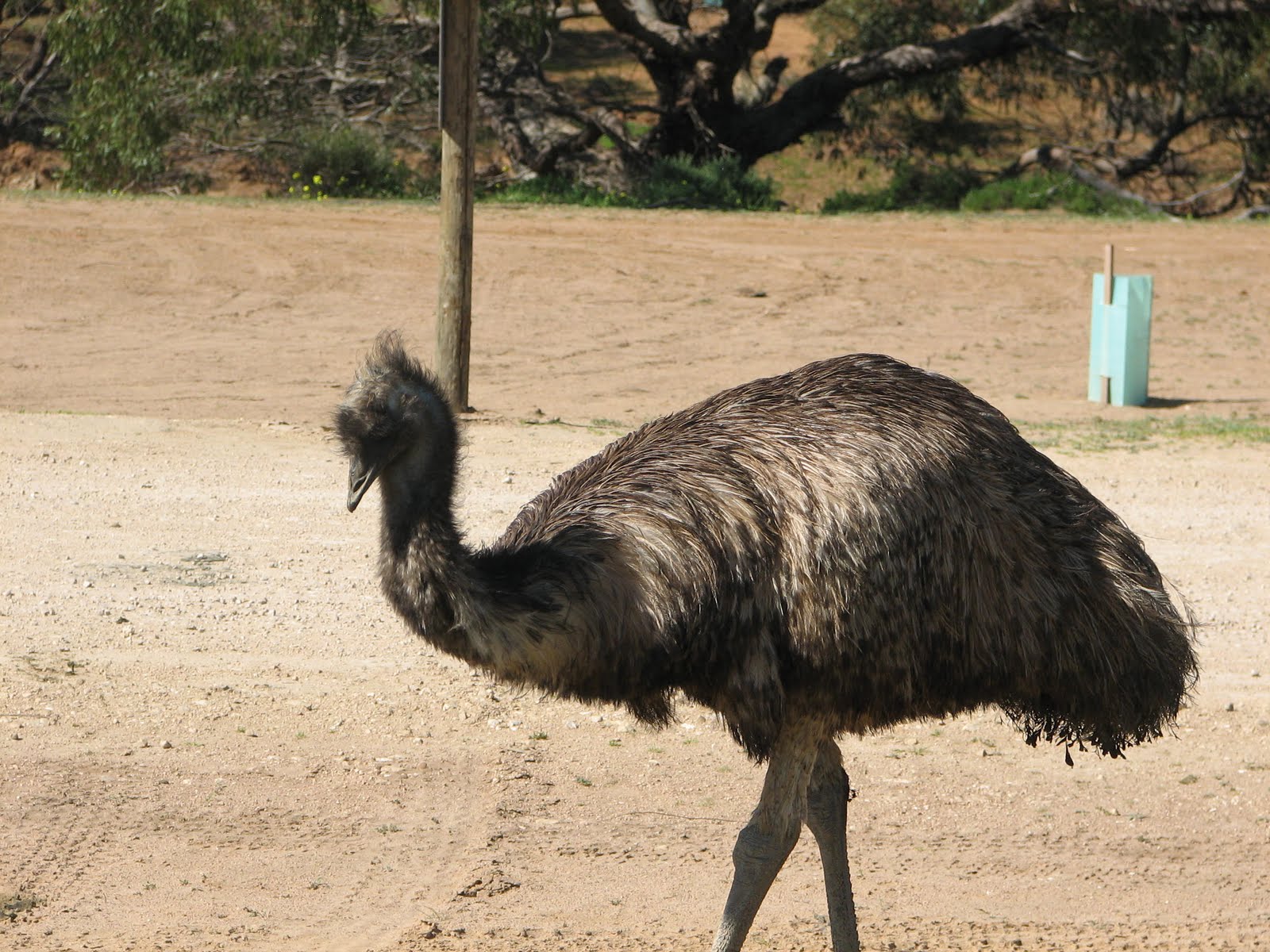
The Australian Emu
The Emu is Australia's largest bird. It is one of the largest birds in the world. It is also flightless.
The female lays her eggs in a depression in the ground. The male then incubates the eggs and cares for the young for up to about 18 months.
For more about Australian birds click here.
The female lays her eggs in a depression in the ground. The male then incubates the eggs and cares for the young for up to about 18 months.
For more about Australian birds click here.
Wednesday, March 31, 2010
An Australian Parrot: the Galah
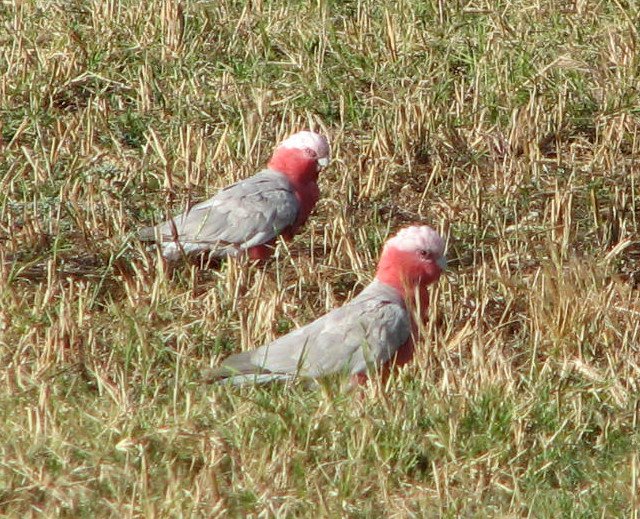
The beautiful Galah is one of the most recognisable of Australian parrots. It can be found in large numbers throughout most of Australia. Flocks can range from a few individuals (2-10) through to many hundreds all flying together. Their beautiful pink feathers make a spectacular sight when a flock flies overhead.
They are also a very popular pet and can be taught to speak a few words. The photos on this post were taken in my garden. They are all of wild birds.
You can read more about Australian birds here.
Photos like these can now be bought on coffee mugs and many other items such as tee-shirts, postcards and so on: click here.
They are also a very popular pet and can be taught to speak a few words. The photos on this post were taken in my garden. They are all of wild birds.
You can read more about Australian birds here.
Photos like these can now be bought on coffee mugs and many other items such as tee-shirts, postcards and so on: click here.
Labels:
Australia,
Birding,
Birds,
Galahs,
Garden Birds,
Parrots,
Photography,
Photos
Tuesday, March 30, 2010
Laughing Kookaburra
On a family visit to Taronga Park Zoo in Sydney this member of the kingfisher family, a Laughing Kookaburra, posed beautifully for my camera. The call of the kookaburra is synonymous with the Australian bush.
To read more about Australian birds and to see more photos of them click here.
Silver Gulls, Victor Harbor, South Australia
More photos and articles about about Australian birds here.
Saturday, September 30, 2006
Rainbow Bee-eaters
One of my all time favourite birds that visit our garden is the Rainbow Bee-eater. Their colours are all the colours of the rainbow, hence the name. They usually visit our area about this time every year, staying around for most of the spring and summer months. In our winter they fly north where it is warmer.
They have an interesting nesting habit - they make a 30-40cm tunnel in the sand and have a little nesting chamber at the end. This has fascinated me since I was a child growing up on a farm near here.
To read my other blog about birds called Trevor's Birding click here.
Labels:
Australia,
Bee-eaters,
Birding,
Birds,
Garden Birds,
Nests
Friday, March 31, 2006
Thursday, March 23, 2006
New birding blog site
I have moved my birding blog to a new web site.
All future entries can be found at
http://www.trevorsbirding.com
I also have a new blog detailing my travelling adventures at
http://www.trevorstravels.com
My other writings can be found at
http://www.trevorhampel.com
Check me out often - I try to update my blogs every day or so.
All future entries can be found at
http://www.trevorsbirding.com
I also have a new blog detailing my travelling adventures at
http://www.trevorstravels.com
My other writings can be found at
http://www.trevorhampel.com
Check me out often - I try to update my blogs every day or so.
Friday, March 03, 2006
Rainbow Lorikeets
Rainbow Lorikeets would have to be one of Australia's most beautiful birds. They are aptly named. As they fly overhead in a flash of colour they light up their little patch of the azure blue sky. Their feathers are a brilliant blend of bright reds, greens, blues and yellows. As they screech overhead - and that is an accurate description of their harsh calls - their stunningly red underwings are like a blood-streak across a blue backdrop.
Rainbow Lorikeets are widespread along the northern, eastern and southern coastal regions of Australia. Their preferred habitats include woodlands, rainforests and wherever eucalypts are numerous. They are easily seen in parks and gardens throughout many of our towns and cities.
Despite being quite common I have had some difficulty getting reasonably clear photographs of this species. When flying they seem to be going too fast to focus on them. When feeding they are often well hidden in the thick foliage of a eucalypt tree as they search out nectar from the flowers.
A single tree, if heavily in flower, can be host to twenty or thirty of these stunning beauties, their contact calls a never-ending chorus of murmurings and chatterings. Yet, despite the numbers, most remain hidden amongst the leaves, usually near the top and out of sight - but not out of earshot. In large numbers their screeching can be deafening, especially near sunset as they squabble and jostle for roosting spots.
Rainbow Lorikeets are widespread along the northern, eastern and southern coastal regions of Australia. Their preferred habitats include woodlands, rainforests and wherever eucalypts are numerous. They are easily seen in parks and gardens throughout many of our towns and cities.
Despite being quite common I have had some difficulty getting reasonably clear photographs of this species. When flying they seem to be going too fast to focus on them. When feeding they are often well hidden in the thick foliage of a eucalypt tree as they search out nectar from the flowers.
A single tree, if heavily in flower, can be host to twenty or thirty of these stunning beauties, their contact calls a never-ending chorus of murmurings and chatterings. Yet, despite the numbers, most remain hidden amongst the leaves, usually near the top and out of sight - but not out of earshot. In large numbers their screeching can be deafening, especially near sunset as they squabble and jostle for roosting spots.
Thursday, March 02, 2006
Rock Doves
This posting sits a little uneasily. All postings are supposed to be about Australian birds. I am about to break my own rule and show some photos of an introduced species, the Rock Dove or Feral Pigeon. (It is also called a Domestic Pigeon or Homing Pigeon).

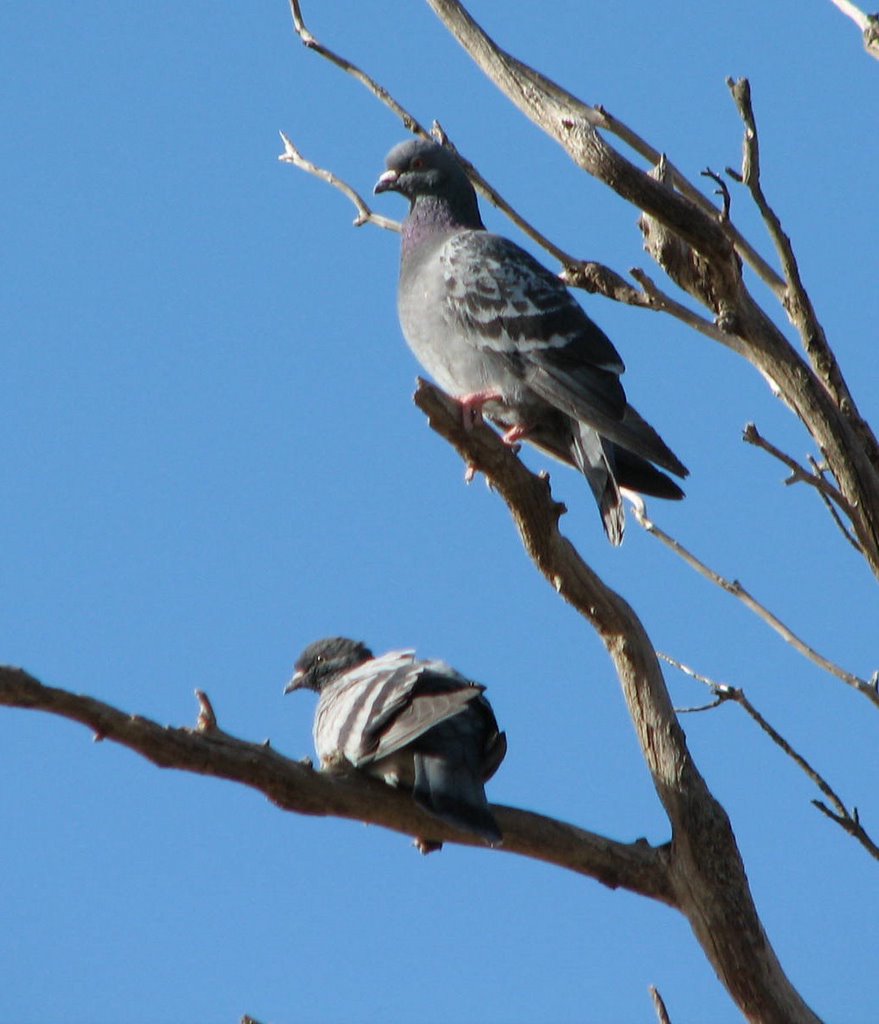
A few weeks ago I managed to get a good photograph of two Rock Doves perched on the dead branches of a eucalyptus tree near our home. They allowed me to approach quite close before flying off. Many more were feeding on the ground in a nearby paddock.
In Australia, like so many places, they have become a pest species, especially in city parks and gardens. I have also seen large flocks numbering in the thousands along the coastal cliffs in parts of South Australia.
Rock Doves were introduced to Australia many years ago and have successfully spread throughout the more temperate regions of southern and eastern Australia. They have been particularly successful in our larger cities and towns. Very large flocks can also been seen near grain storage silos in rural areas.

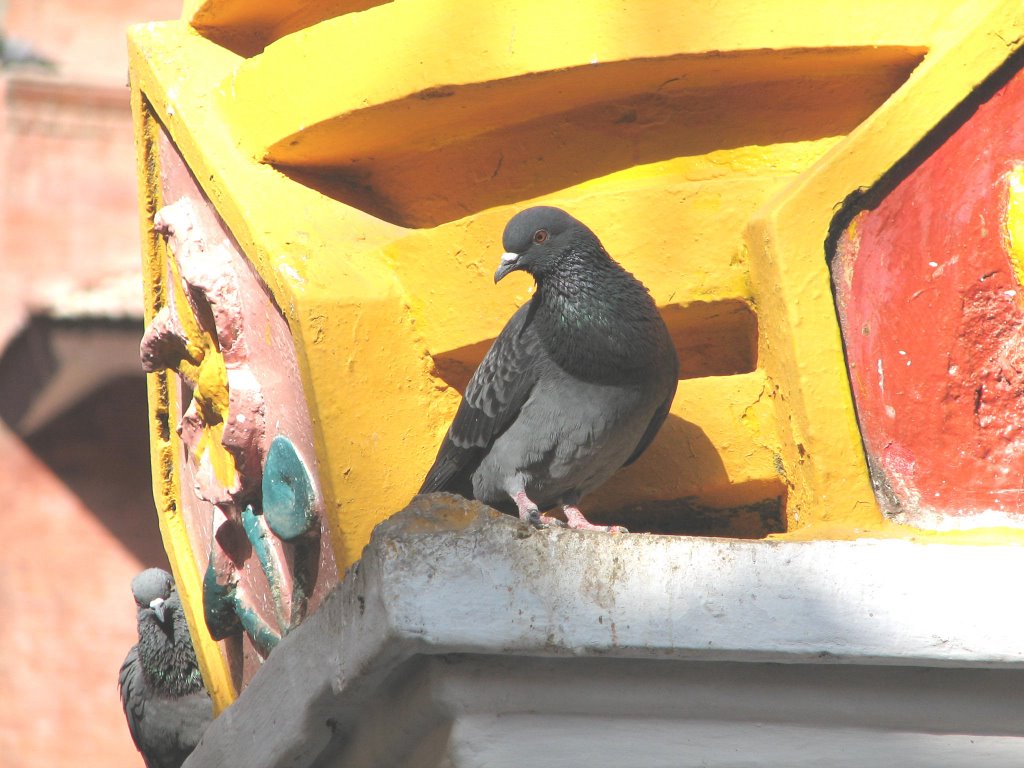
Above: A photo of a Rock Dove on a temple, Kathmandu, Nepal.
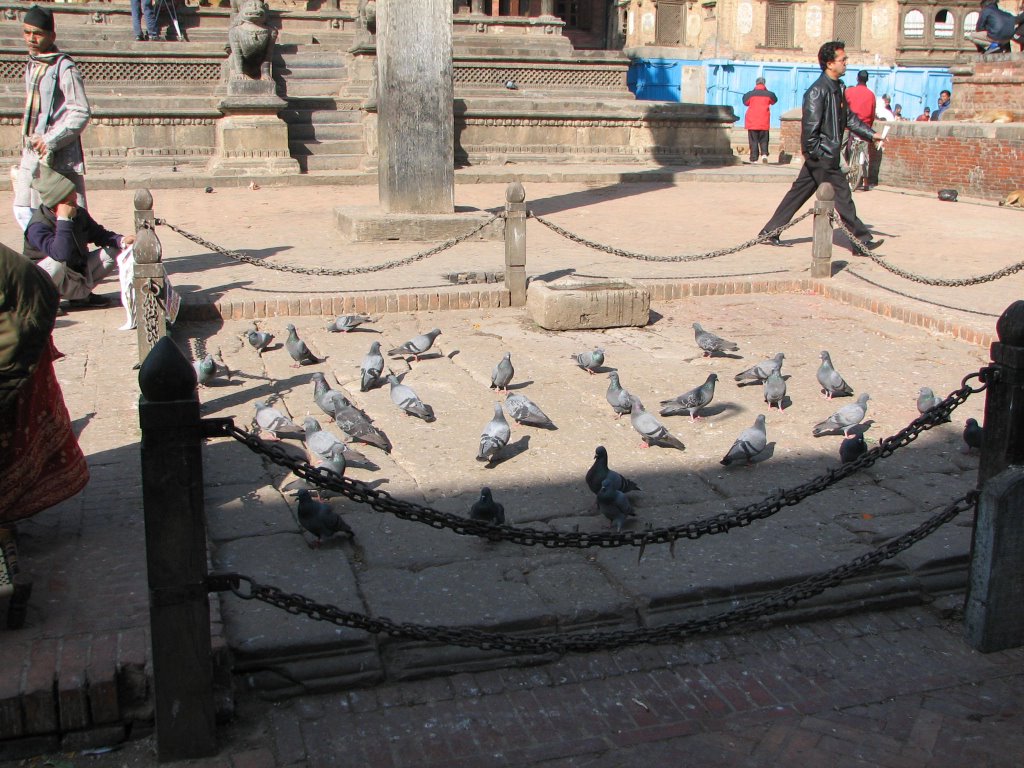
Several days later while visiting the city of Patan, Kathmandu, I saw a local lady selling food for tourists and locals to feed to the local population of pigeons. As the seed was spread by her customers, hundreds of pigeons descended from the nearby temples and other buildings in thick clouds of flapping feathers. They all assembled hurriedly in a little chained off area set aside for the purpose. This is not the way to discourage their booming populations. I didn't stop to ask if feeding the pigeons had some religious significance; perhaps it did.


Above: Photo of Rock Doves perching on a dead
eucalyptus branch, near Murray Bridge, South Australia.
A few weeks ago I managed to get a good photograph of two Rock Doves perched on the dead branches of a eucalyptus tree near our home. They allowed me to approach quite close before flying off. Many more were feeding on the ground in a nearby paddock.
In Australia, like so many places, they have become a pest species, especially in city parks and gardens. I have also seen large flocks numbering in the thousands along the coastal cliffs in parts of South Australia.
Rock Doves were introduced to Australia many years ago and have successfully spread throughout the more temperate regions of southern and eastern Australia. They have been particularly successful in our larger cities and towns. Very large flocks can also been seen near grain storage silos in rural areas.
Many cities around the world have a massive pigeon problem. The health risk posed by these birds must be enormous, not to mention the mess they make. On a recent visit to Kathmandu, Nepal, I had the misfortune to be the target of not one but two pigeons on the same day. This annoyance resulted in some extra washing in my hotel room that night. I was so pleased I was wearing a hat at the time.

Above: A photo of a Rock Dove on a temple, Kathmandu, Nepal.
Several days later while visiting the city of Patan, Kathmandu, I saw a local lady selling food for tourists and locals to feed to the local population of pigeons. As the seed was spread by her customers, hundreds of pigeons descended from the nearby temples and other buildings in thick clouds of flapping feathers. They all assembled hurriedly in a little chained off area set aside for the purpose. This is not the way to discourage their booming populations. I didn't stop to ask if feeding the pigeons had some religious significance; perhaps it did.

Above: a photo of pigeons in Patan, Nepal.
Wednesday, March 01, 2006
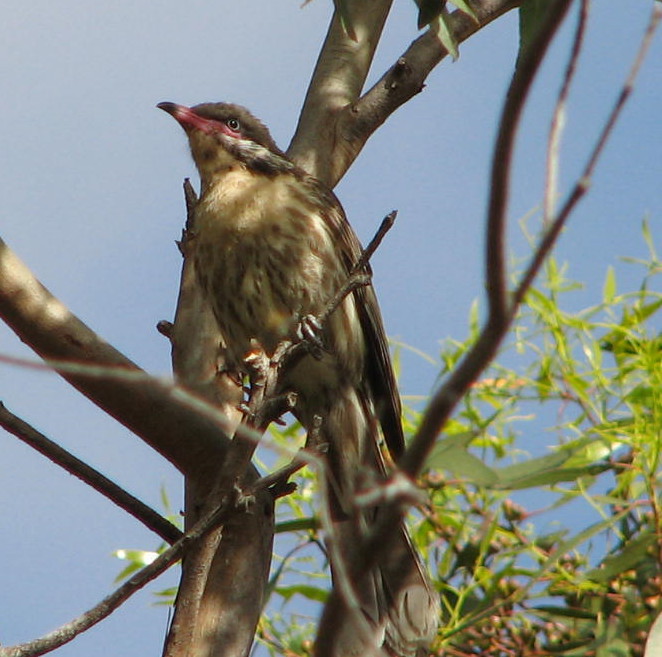
Spiny Cheeked Honeyeaters
Spiny Cheeked Honeyeaters are a resident breeding species in our garden in Murray Bridge, South Australia. While they are not very common or numerous in this area they are widespread. They tend to be found in the drier, inland regions of Australia but can also be found in some coastal areas. They are not present in the tropical northern regions.
Hardly a day goes by without several of them visiting the bird bath near our sun room. They are often seen feeding on the vast array of native Australian plants in our garden. They have a particular preference for the Correas, Eremophilas and Grevilleas which abound in our garden.
While their calls can be somewhat haunting, I love hearing their "yoo hoo" calls as they scrabble around searching for a feed.
Hardly a day goes by without several of them visiting the bird bath near our sun room. They are often seen feeding on the vast array of native Australian plants in our garden. They have a particular preference for the Correas, Eremophilas and Grevilleas which abound in our garden.
While their calls can be somewhat haunting, I love hearing their "yoo hoo" calls as they scrabble around searching for a feed.
Monday, February 27, 2006
Taronga Zoological Park Pt 2

Photo of a Galah at the Bird Show at Taronga Zoo, Sydney.
The Galah pictured above is featured in the Bird Show at the Taronga Zoological Park. The keeper asks a member of the audience to place a coin in his or her palm and to stand up. The Galah then flies to the audience member and collects the coin. It then flies back to the keeper and pops the coins in the keeper's pocket. After some more banter from the keeper the bird returns the coin to its original owner. It is all very amusing and indicates how some of our birds can be trained to do tricks like this.
As well as seeing many birds, both wild and captive, there are many interesting animals to view. One of these is the Himalayan Thar, a species I saw in the wild only a few weeks ago on a trek through the Everest region of the Himalayan mountains.

Photo of an Himalayan Thar, Taronga Zoo, Sydney.
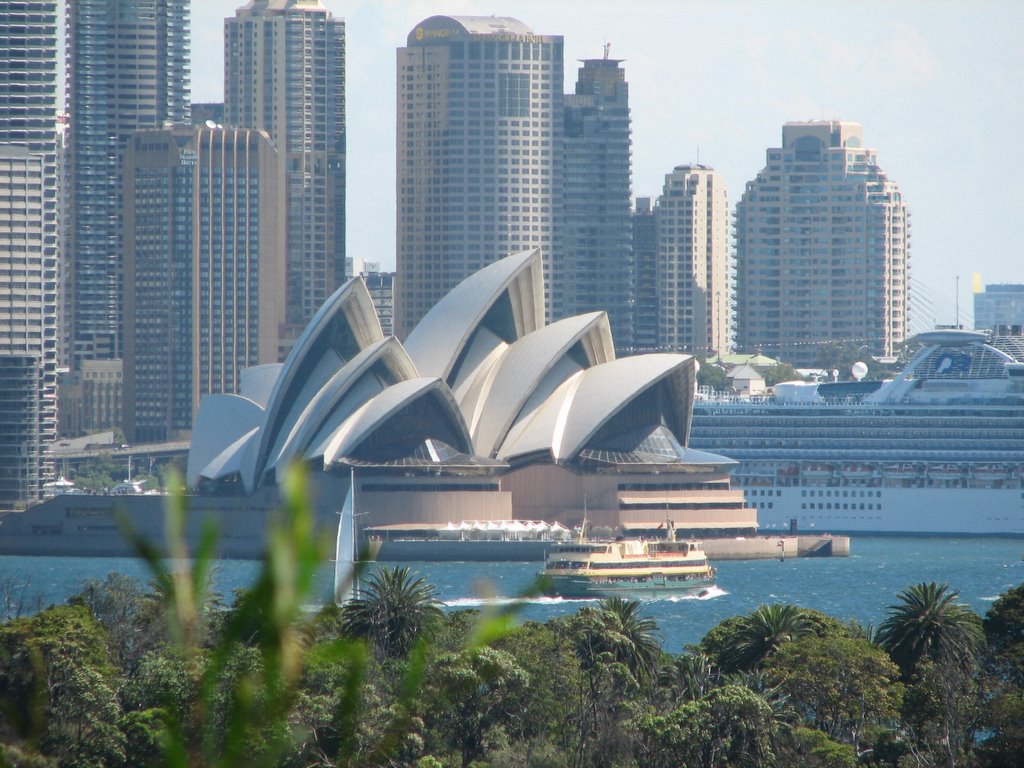
Another highlight on one's visit to this zoo is the many absolutely stunning views of Sydney Harbour from the grounds of Taronga Park.
It is almost worth paying the entrance fee just to see the great views.
Saturday, February 25, 2006
Taronga Zoological Park
We are in Sydney visiting our son and daughter in law. Today we went to the Taronga Zoological Park. it has been almost six years since our last visit. There have been many changes made since then. It was quite obvious that big attempts have been made to improve both the animal displays and the overall facilities for humans.
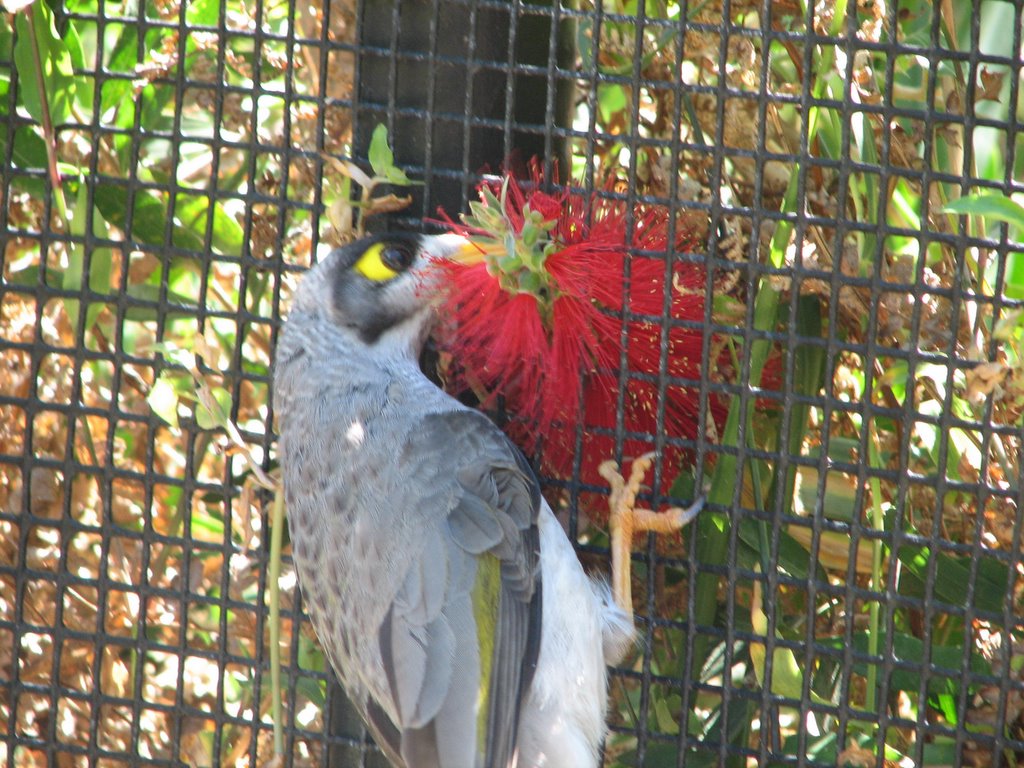
While our prime objective was to view the animal displays, I cannot help being on the lookout for native Australian birds flying around free. Many of the enclosure's feed trays provide a free meal for some of our native species. This Noisy Miner didn't need to get into one of the cages. It just fed from a bottlebrush flower poking though one of the aviaries.

Photo of Noisy Miner feeding on a bottlebrush (Callistemon sp)
As we were going along we observed a Laughing Kookaburra sitting quietly on the branch of a tree near the path. This is one species I have been trying to photograph since buying my new digital camera. This was one species I didn't expect to see or photograph today.

Photo of a Laughing Kookaburra in the grounds of Taronga Zoo, Sydney.
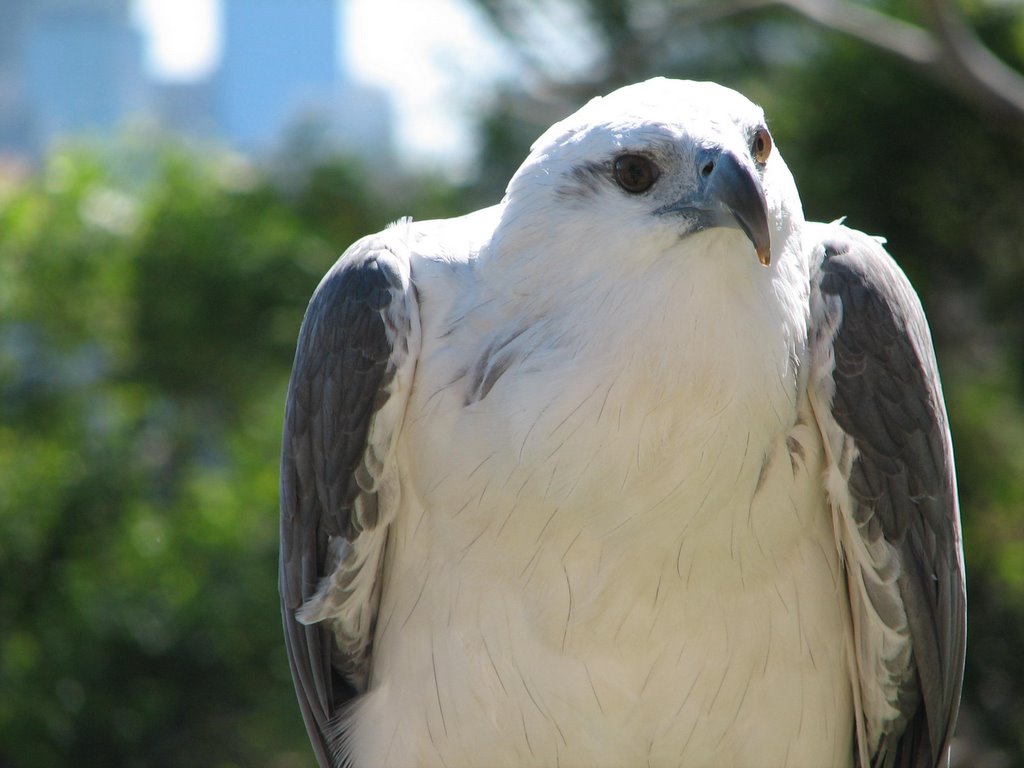
One of the highlights of visiting Taronga Zoo is the show put on by a range of Australian birds under the direction of several keepers. It is awesome to observe a Wedge Tailed Eagle gliding about a metre or two overhead as it headed down towards the keeper. We also saw a beautiful White-Bellied Sea-Eagle.


Photo of a White-Bellied Sea-Eagle
Monday, February 13, 2006
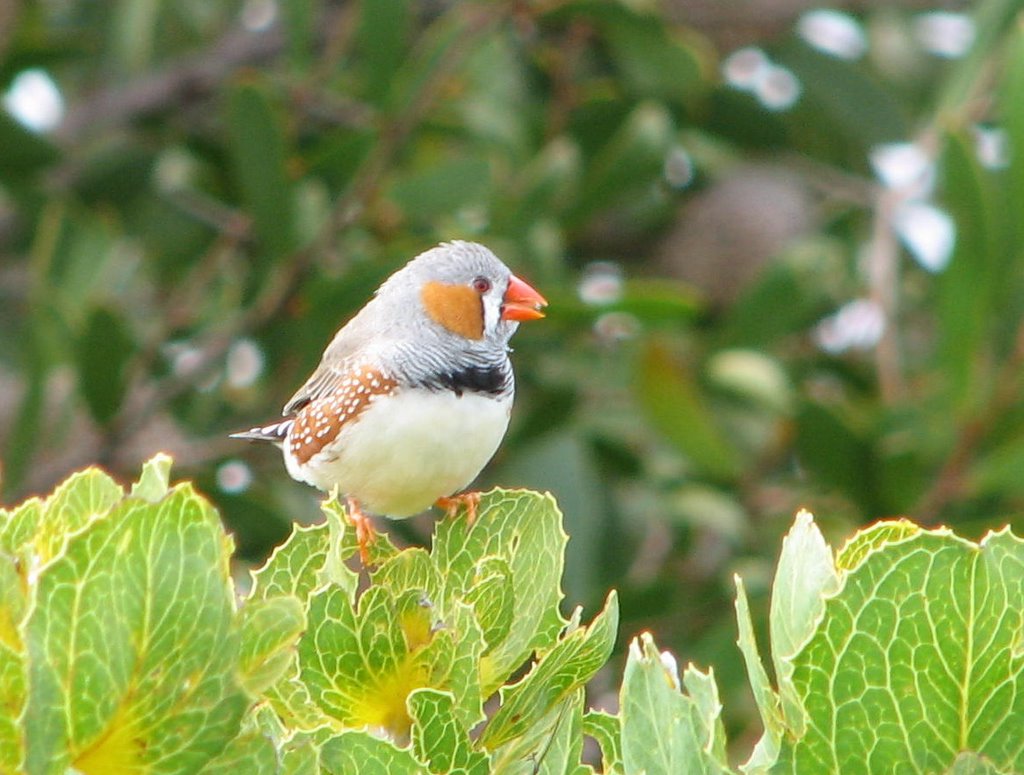
Zebra Finch
We went to visit Pangarinda Arboretum again today. This is a large plantation of Australian native plants just east of Wellington, South Australia. This is about half an hour from Murray Bridge, or just over an hour from Adelaide.
As is my custom these days my attention was divided between watching birds, making a list of birds I see for my database, photographing any birds I see and photographing the many beautiful flowers in this arboretum. Summer is fast coming to an end here in the Murraylands region of South Australia so there are not too many native Australian plants in flower at present, but still enough for me to get some very nice shots.

The birding was also quite good with 23 species recorded. The best sighting of the day was that of Zebra Finches. I have recorded this species here before, but not in such good numbers. They almost outnumbered the commonest bird in the garden, the New Holland Honeyeater. A number of finches, including an obliging male, came close enough for me to get some lovely photos.
As is my custom these days my attention was divided between watching birds, making a list of birds I see for my database, photographing any birds I see and photographing the many beautiful flowers in this arboretum. Summer is fast coming to an end here in the Murraylands region of South Australia so there are not too many native Australian plants in flower at present, but still enough for me to get some very nice shots.

The birding was also quite good with 23 species recorded. The best sighting of the day was that of Zebra Finches. I have recorded this species here before, but not in such good numbers. They almost outnumbered the commonest bird in the garden, the New Holland Honeyeater. A number of finches, including an obliging male, came close enough for me to get some lovely photos.
Wednesday, February 08, 2006
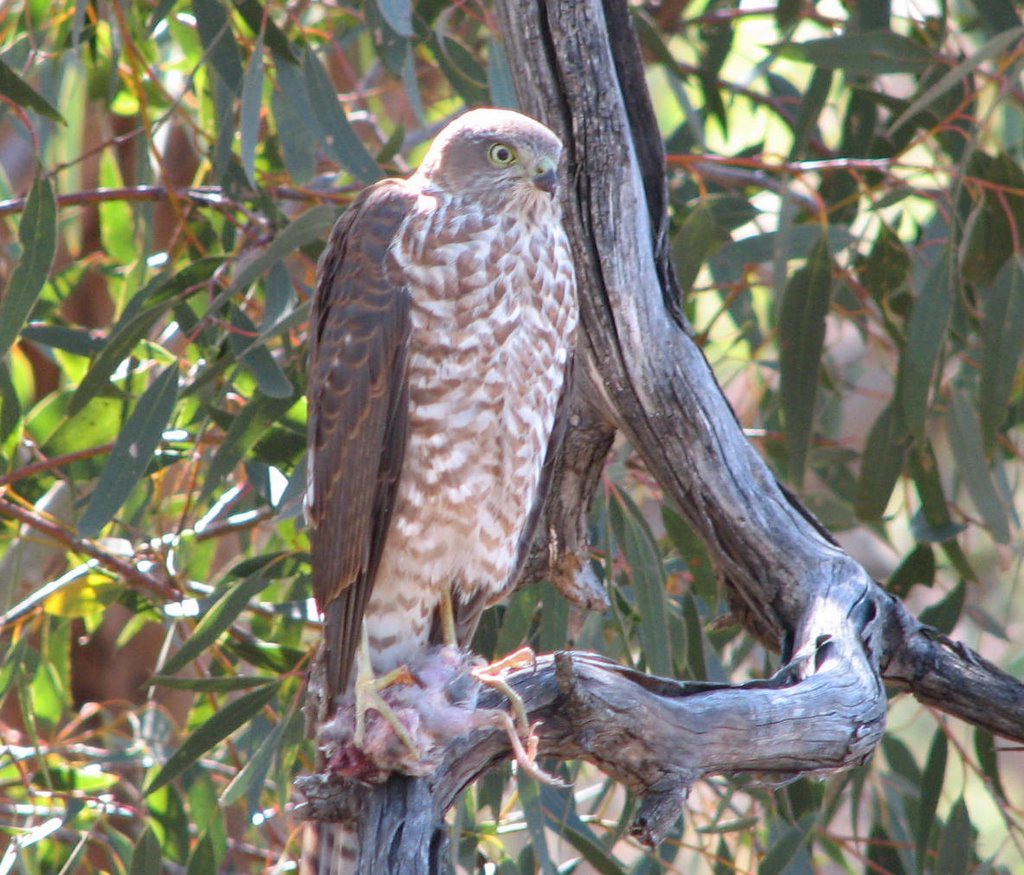
Collared Sparrowhawk
I haven't updated my blog since late last year. I have been overseas for much of January, first in Thailand and then trekking in Nepal. Soon I will be writing a separate blog for that trip. Watch out for some amazing photography.
In the meantime, the bird life around home continues to delight. Just a short while ago while I was reading today's paper I looked up to see a Collared Sparrowhawk in a tree just outside our sun room. I took one photograph through the window but this was not very satisfactory because the bird was sitting on a branch at least 30 metres away.

I went outside and crept closer, photographing every few metres. I was eventually able to creep to within five metres. Even though this species is regularly seen in our garden, this is the first time I have had the opportunity to get good shots of one. The individual here is an immature. I didn't manage to see what it was eating. It may have been a House Sparrow. It flew off with the evidence.
In the meantime, the bird life around home continues to delight. Just a short while ago while I was reading today's paper I looked up to see a Collared Sparrowhawk in a tree just outside our sun room. I took one photograph through the window but this was not very satisfactory because the bird was sitting on a branch at least 30 metres away.

I went outside and crept closer, photographing every few metres. I was eventually able to creep to within five metres. Even though this species is regularly seen in our garden, this is the first time I have had the opportunity to get good shots of one. The individual here is an immature. I didn't manage to see what it was eating. It may have been a House Sparrow. It flew off with the evidence.
Wednesday, December 21, 2005
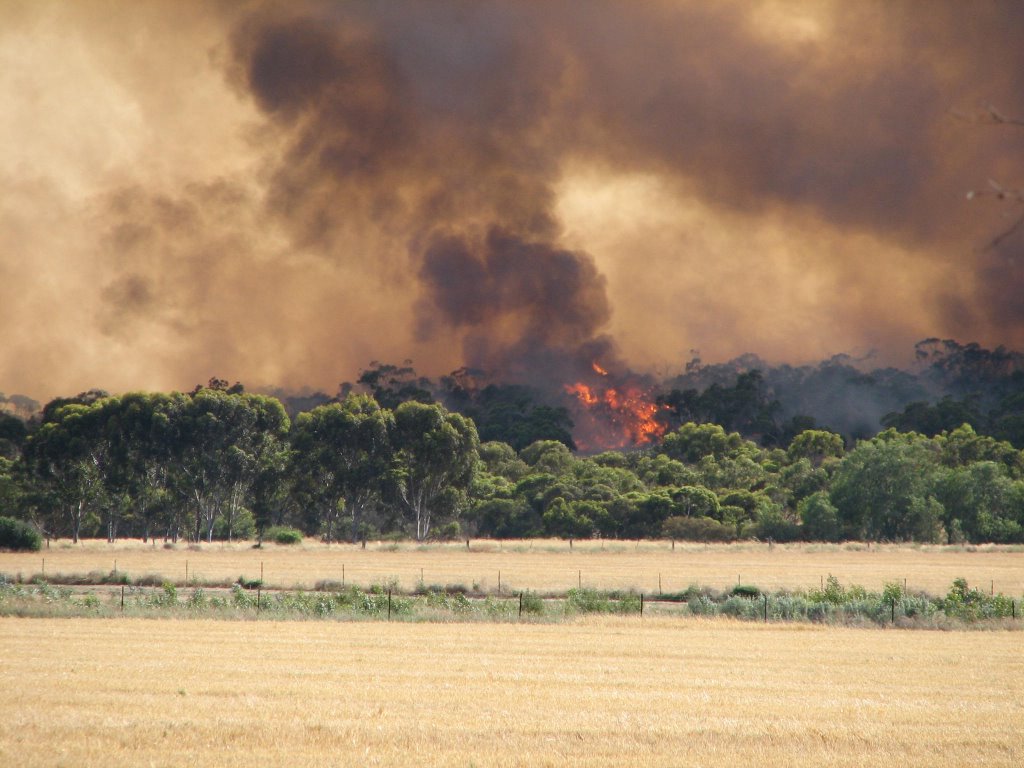
Bushfire
Yesterday's weather forecast promised northerly winds with a maximum temperature of 37 degrees Celsius. I decided to go for an hour long walk early in the morning to avoid the worst of the heat.
As far as birds were concerned I didn't see anything out of the ordinary. Numbers seemed to be down by about 50% but this only indicates that they were not calling as much. On my local walks more than half of my bird identifications are by call alone.
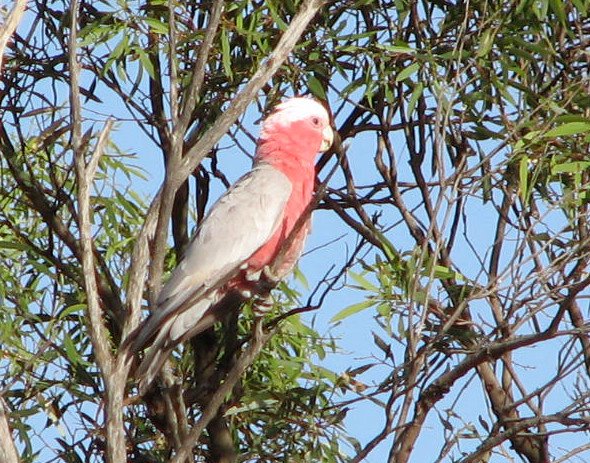
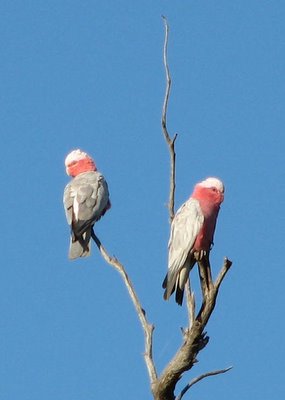
I did get a good photograph of two - presumably a pair - of galahs sitting high in the dead branches of a mallee tree near the road.
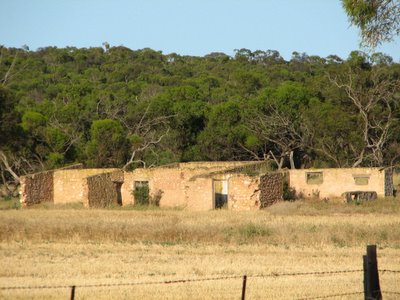
I was intrigued by the rising sun lighting up the ruins of an old farmhouse less than a kilometre from our front gate. I am very pleased with this shot because it also shows up the thick mallee scrub behind it. During summer months I rarely venture up in that area for walks or bird watching because the few tracks through the area are so overgrown with weeds and grasses one cannot have warning of snakes. Little did I know that a few hours later this area would become an inferno.
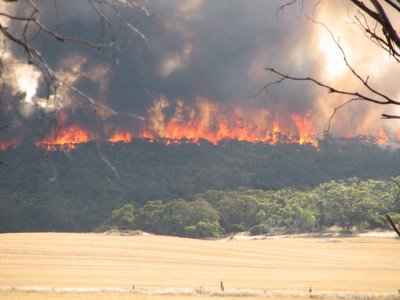
Mid afternoon a bushfire broke out just behind this old farmhouse. As the afternoon passed the fire grew worse and by four o'clock, with the temperature around 42 degrees, we and our neighbours decided to pack some essential items in our cars and have them ready for a retreat. If the forecast cool change came early or the wind suddenly changed direction, our house was in a direct line of the fire.
We watched anxiosly for the next eight hours as about thirty fire crews, many from distant towns, battled the blaze. A helicopter constantly dropped water and three fire fighting fixed wing planes dropped fire retardant on the blaze. At midnight another twelve relief fire crews and their trucks came to the scene; some had travelled from as far as Pinnaroo, nearly two hours travel away.
After a restless few hours sleep we were awoken at 4:30am by the smell of smoke; the wind had finally changed. By then there were only a few spot fires visible from our window. This morning the cool change has been welcome relief. Several fire crews are still watching the area. Wisps of smoke can still be seen from a few hot spots. Mallee stumps and roots can smoulder for weeks if left unattended.
The main threat is now over, but the forecast for more hot weather over the next two days will keep us on edge. This, however, has been our only fire threat in over twenty years of living in this house.
As far as birds were concerned I didn't see anything out of the ordinary. Numbers seemed to be down by about 50% but this only indicates that they were not calling as much. On my local walks more than half of my bird identifications are by call alone.
I did get a good photograph of two - presumably a pair - of galahs sitting high in the dead branches of a mallee tree near the road.

I was intrigued by the rising sun lighting up the ruins of an old farmhouse less than a kilometre from our front gate. I am very pleased with this shot because it also shows up the thick mallee scrub behind it. During summer months I rarely venture up in that area for walks or bird watching because the few tracks through the area are so overgrown with weeds and grasses one cannot have warning of snakes. Little did I know that a few hours later this area would become an inferno.

Mid afternoon a bushfire broke out just behind this old farmhouse. As the afternoon passed the fire grew worse and by four o'clock, with the temperature around 42 degrees, we and our neighbours decided to pack some essential items in our cars and have them ready for a retreat. If the forecast cool change came early or the wind suddenly changed direction, our house was in a direct line of the fire.
We watched anxiosly for the next eight hours as about thirty fire crews, many from distant towns, battled the blaze. A helicopter constantly dropped water and three fire fighting fixed wing planes dropped fire retardant on the blaze. At midnight another twelve relief fire crews and their trucks came to the scene; some had travelled from as far as Pinnaroo, nearly two hours travel away.

After a restless few hours sleep we were awoken at 4:30am by the smell of smoke; the wind had finally changed. By then there were only a few spot fires visible from our window. This morning the cool change has been welcome relief. Several fire crews are still watching the area. Wisps of smoke can still be seen from a few hot spots. Mallee stumps and roots can smoulder for weeks if left unattended.

The main threat is now over, but the forecast for more hot weather over the next two days will keep us on edge. This, however, has been our only fire threat in over twenty years of living in this house.
Thursday, December 15, 2005
Galahs in the morning sun
On my morning walks through the mallee scrubland and the nearby farming land I often come across or hear the beautiful Australian parrot, the Galah. This species is very common throughout most of Australia. They can often be observed in pairs or small flocks and occasionally very large flocks numbering several hundred.
On recent morning walks I have seen about 4 to 8 Galahs sitting on top of several wattle bushes (Acacia spp) on the side of the road I walk along. They are usually busy eating the seeds. The rising sun catches the brilliant colours of the breast feathers, lighting up the dull green leaves of the bush. On too many occasions I have not had my camera with me.
Yesterday I tried to creep up to get a good photograph. This little flock was very wary and flew off to some nearby mallee trees. I was able to zoom in sufficiently to get a reasonable shot of one of them.
In the paddock opposite there a few more Galahs busily searching for seeds in the grasses in the field. This is a common sight in Australian paddocks. Sometimes the ground seems to turn pink as hundreds of Galahs swoop down to the ground looking for a meal.
On recent morning walks I have seen about 4 to 8 Galahs sitting on top of several wattle bushes (Acacia spp) on the side of the road I walk along. They are usually busy eating the seeds. The rising sun catches the brilliant colours of the breast feathers, lighting up the dull green leaves of the bush. On too many occasions I have not had my camera with me.
Yesterday I tried to creep up to get a good photograph. This little flock was very wary and flew off to some nearby mallee trees. I was able to zoom in sufficiently to get a reasonable shot of one of them.

In the paddock opposite there a few more Galahs busily searching for seeds in the grasses in the field. This is a common sight in Australian paddocks. Sometimes the ground seems to turn pink as hundreds of Galahs swoop down to the ground looking for a meal.
Wednesday, December 14, 2005
Chuffing around
On my morning walks in the hills to the west of Murray Bridge in South Australia I often come across family groups of White Winged Choughs (pronounced "chuffs"). These amusing birds are reasonably common throughout the mallee districts of our state. Their white wings are quite conspicuous when they are in flight.
White Winged Choughs are usually found in family groups of about four or five through to as many as fifteen and sometimes more. They are often seen foraging for food on the ground. We often watch them from our sun room or in our garden as they strut around with an important looking air. It amuses us that they seem to prefer walking to flying. When startled, they fly up to the nearest tree, their rasping alarm calls carrying far. At other times their calls can be mournful whistles.
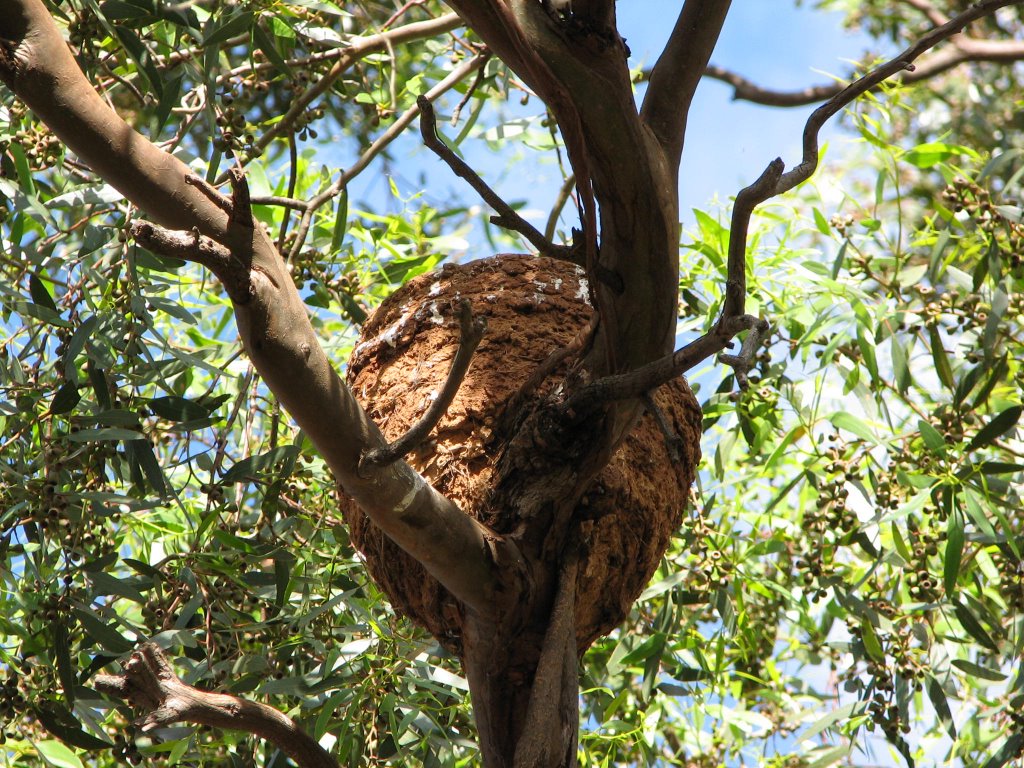
White Winged Choughs make a large bowl shaped mud nest. Below is a photograph I took this morning in an area where I have often observed several groups of choughs. This particular nest did not seem to be in use at present. It looks quite new and was probably used in the spring time this year (Sept-Nov). Elsewhere I have observed the whole family group building the nest and later co-operatively feeding the young in the nest. Approximate size of the nest is 20-25cm high and 20-25cm wide.
White Winged Choughs are usually found in family groups of about four or five through to as many as fifteen and sometimes more. They are often seen foraging for food on the ground. We often watch them from our sun room or in our garden as they strut around with an important looking air. It amuses us that they seem to prefer walking to flying. When startled, they fly up to the nearest tree, their rasping alarm calls carrying far. At other times their calls can be mournful whistles.
White Winged Choughs make a large bowl shaped mud nest. Below is a photograph I took this morning in an area where I have often observed several groups of choughs. This particular nest did not seem to be in use at present. It looks quite new and was probably used in the spring time this year (Sept-Nov). Elsewhere I have observed the whole family group building the nest and later co-operatively feeding the young in the nest. Approximate size of the nest is 20-25cm high and 20-25cm wide.
Tuesday, December 13, 2005
Lorikeets, Parrots and Wattlebirds
This evening I was attracted by some birds calling outside. I went to investigate, thinking that they were probably Rainbow Lorikeets. I didn't take my camera with me.
Sure enough, I had some good views of two Rainbow Lorikeets in the tree next to our driveway. The seeting sun was lighting up the brilliant colours of one of them. I needed my camera. It was still inside.
I casually walked inside trying not to scare the birds away by sudden movements. On emerging with the camera the lorikeets had disappeared - of course! Instead, I was content to get some very good shots of a Red Wattlebird in the setting sun in the same tree. It almost seemed like he was posing for me.
Perhaps the lorikeets had persuaded him to pose for them, because as I walked inside, they emerged from a nearby tree and flew a sortie overhead, screeching their taunts at me. One day, one day I'll get a good shot of them.
Rainbow Lorikeets are quite common throughout the urban areas of Murray Bridge but we only occasionally see them on our home block on the outskirts of the city. In recent weeks they have been daily visitors. This indicates that there has to be enough plants flowering around here to attract these beautiful, but noisy, birds.
On this morning's walk a had good views of two Elegant Parrots. This beautiful species is widespread in this area but they are not common anywhere. I also saw a single Adelaide Rosella. These are common in the Adelaide region and this is the eastern extent of their range and are uncommon in Murray Bridge. If I'd had my camera with me I would have been able to get an excellent photograph of a Rainbow Bee-eater sitting on a gate in the early morning sun.
Tomorrow.
Tomorrow - I'll take my camera on my walk.
Sure enough, I had some good views of two Rainbow Lorikeets in the tree next to our driveway. The seeting sun was lighting up the brilliant colours of one of them. I needed my camera. It was still inside.
I casually walked inside trying not to scare the birds away by sudden movements. On emerging with the camera the lorikeets had disappeared - of course! Instead, I was content to get some very good shots of a Red Wattlebird in the setting sun in the same tree. It almost seemed like he was posing for me.
Perhaps the lorikeets had persuaded him to pose for them, because as I walked inside, they emerged from a nearby tree and flew a sortie overhead, screeching their taunts at me. One day, one day I'll get a good shot of them.
Rainbow Lorikeets are quite common throughout the urban areas of Murray Bridge but we only occasionally see them on our home block on the outskirts of the city. In recent weeks they have been daily visitors. This indicates that there has to be enough plants flowering around here to attract these beautiful, but noisy, birds.
On this morning's walk a had good views of two Elegant Parrots. This beautiful species is widespread in this area but they are not common anywhere. I also saw a single Adelaide Rosella. These are common in the Adelaide region and this is the eastern extent of their range and are uncommon in Murray Bridge. If I'd had my camera with me I would have been able to get an excellent photograph of a Rainbow Bee-eater sitting on a gate in the early morning sun.
Tomorrow.
Tomorrow - I'll take my camera on my walk.
Friday, December 09, 2005
Lapwings Living Dangerously
On my way to a friend's place this afternoon my car was "attacked" by an angry Masked Lapwing. I slowed right down to make sure I didn't drive over it.
A few metres from the edge of the road was the reason for all the aggro. A tiny golf ball sized bit of fluff on legs was trying to cross the road. It made it successfully to the other side before another car came along. It too, was attacked by the very defensive parent.
This incident reminds me of a similar sighting over ten years ago. It was at possibly the busiest intersection in Adelaide. For those of you who know Adelaide it was the North Terrace, West Terrace, Port Road intersection. The very brave Masked Lapwing parents were trying desperately to keep their two little ones on the triangular grass medium strip. Trying to cross six or eight lanes of busy Saturday afternoon traffic would not have been a good career move. Of course, I was not able to witness what happened. I had to go with the flow of traffice and not sit there bird watching.
A few metres from the edge of the road was the reason for all the aggro. A tiny golf ball sized bit of fluff on legs was trying to cross the road. It made it successfully to the other side before another car came along. It too, was attacked by the very defensive parent.
This incident reminds me of a similar sighting over ten years ago. It was at possibly the busiest intersection in Adelaide. For those of you who know Adelaide it was the North Terrace, West Terrace, Port Road intersection. The very brave Masked Lapwing parents were trying desperately to keep their two little ones on the triangular grass medium strip. Trying to cross six or eight lanes of busy Saturday afternoon traffic would not have been a good career move. Of course, I was not able to witness what happened. I had to go with the flow of traffice and not sit there bird watching.
Subscribe to:
Posts (Atom)